Key Takeaways
- No parade in 2026: Same Sky couldn't fund it, so 21 December is a smaller display at Moulsecoomb Place
- Use Same Sky for the final route and timings
- Expect a moving procession, then a seafront finale
- Choose the procession or the beach finale
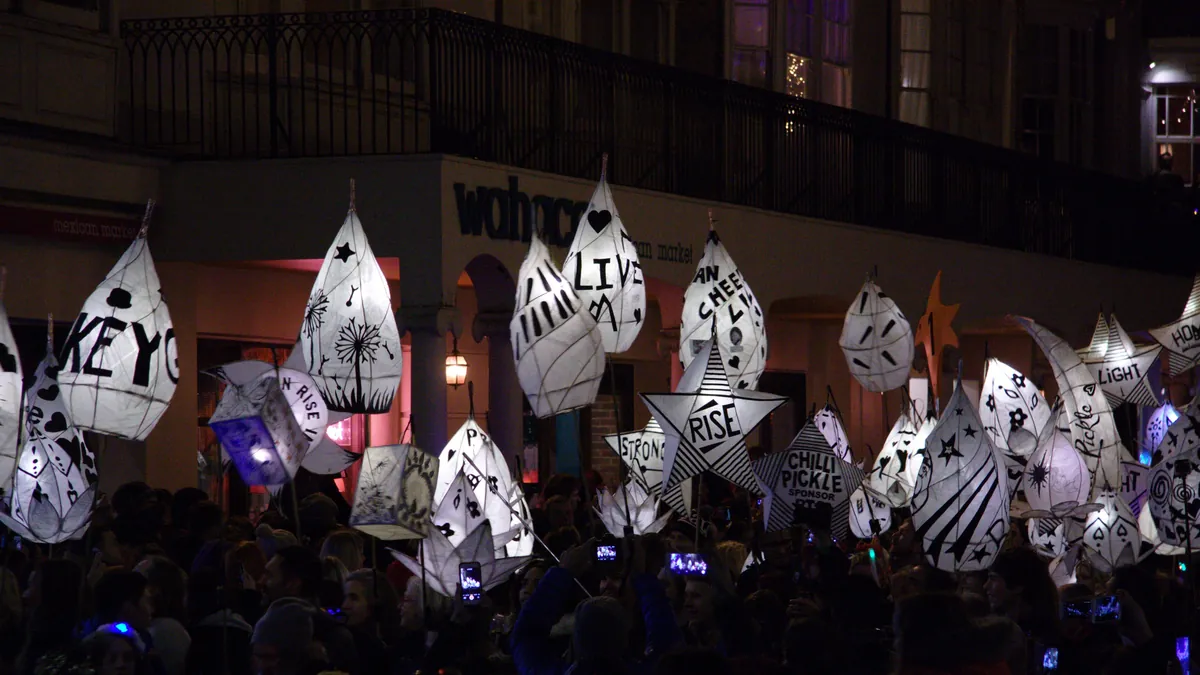 Dominic Alves (CC BY 2.0)
Brighton’s shortest day gets its own send-off
Burning the Clocks is Brighton’s winter-solstice lantern procession: handmade paper-and-willow clocks move through the city before a communal seafront finale. It is public art, parade and end-of-year ritual in one, run by the local outdoor-arts charity Same Sky.
Same Sky took 2025 as a fallow year and planned a full return in 2026. That return is off: the street parade won’t happen in 2026 either, for lack of funding, Same Sky confirms. The charity told Brighton and Hove News it costs close to £60,000 (GBP) to stage. Instead, on Monday 21 December 2026 there’s a smaller winter-solstice evening at The Green, Moulsecoomb Place on Lewes Road, 4pm to 8pm, with lanterns made in school workshops, the Magicada effigy and local musicians. Same Sky is still fundraising in the hope the parade returns in 2027.
If you’re building a wider December day around it, our Brighton Christmas guide covers the city before the lanterns come out.
| Question | Answer |
|---|---|
| When is it? | No parade in 2026. A smaller solstice display runs on Monday 21 December 2026, 4pm to 8pm, at Moulsecoomb Place |
| Where does it go? | The route changes, so check Same Sky’s map for the year |
| Is watching free? | Watching the street procession has traditionally been free |
| Can I join the parade? | Taking part is organised by Same Sky, so you can’t just turn up with a lantern |
| Is there a beach finale? | It’s usually part of the plan. Check the current programme |
What you’re watching
The clocks are lanterns rather than wristwatches writ large. Community groups, artists and residents carry them through central Brighton, turning the darkest part of December into a moving line of light. At the end, the lanterns are burned to mark the passing year.
The first Burning the Clocks took place in Moulsecoomb’s Wild Park in 1993, according to Same Sky. The 2026 effigy theme is Magicada, announced during the fallow year: a symbolic rest followed by a noisy awakening.
Where to stand
Choose one part of the night. Watching the procession pass is the calmer option, while following it to the finale brings the biggest crowd and the longest time standing outside. Trying to do both usually means crossing streets already taken over by the event.
The route can change with road management and construction, so rely on the map Same Sky publishes for the year rather than last year’s.
Going with children
The procession is the easiest part for families. You can arrive for a stretch, watch the lanterns pass and leave before the crowded beach finale. For an earlier or indoor fallback, try our things to do with kids in Brighton.
Next steps
If the parade returns in 2027, look for the procession start, route, finale, access arrangements, road closures and any lantern-making workshops once Same Sky publishes them. For other annual fixtures, see our Brighton events calendar.
Official updates: Same Sky’s Burning the Clocks page.